The paperwork never seems to stop, and you worry that changing the process might risk clinical quality. What if you could cut through the admin load without losing control over the decisions that matter? A self-running occupational health system handles the routine tasks like digital onboarding, role-based compliance, and automated recalls, freeing your team to focus on clinician-led decisions while gaining speed, visibility, and audit-ready reporting.
Streamlining Occupational Health Systems
Occupational health often seems like a juggling act between maintaining compliance and managing overwhelming paperwork. Let’s explore how a self-running system can simplify this process.
Self-running Occupational Health Explained
A self-running occupational health system automates repetitive tasks, allowing you to focus on what truly matters. Imagine a system where digital onboarding, role-based routing, and automated recalls happen seamlessly. This approach not only reduces the admin burden but also maintains the quality of clinical decisions.
Separating Admin from Clinical Tasks
The key is in dividing tasks effectively. Admin tasks such as booking and scheduling can be automated, freeing up clinicians to focus on patient care. This separation ensures that clinical judgement remains at the forefront while mundane tasks run in the background. With systems like NPH RoleReady and ClearPath, you maintain oversight without the manual effort.
Benefits of Role-based Compliance
Role-based compliance is a game-changer. By mapping each role to specific health requirements, you ensure employees receive the right checks without unnecessary duplication. This precision reduces admin workload and supports safer workplaces. Moreover, it streamlines compliance, making it easier to spot gaps and address them proactively.
The Practicalities of Digital Onboarding
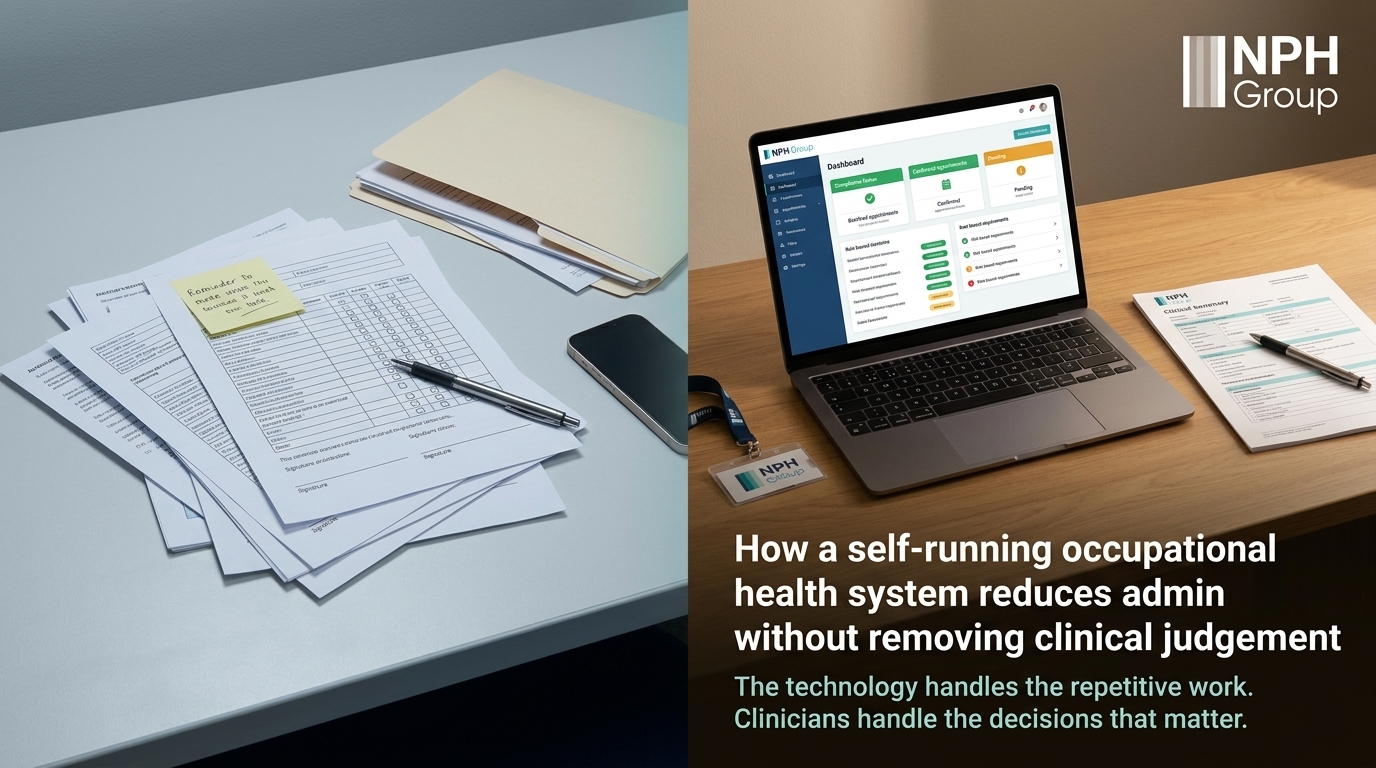
Digital onboarding can transform how you manage occupational health. Here’s how it works and why it’s essential.
Role Mapping and Its Importance
Role mapping assigns specific health requirements to each job role. This process ensures every employee receives the necessary checks, reducing the risk of missing crucial assessments. With clear role mapping, you reduce over-testing and avoid gaps in compliance. It’s a practical approach that saves time and resources, allowing you to focus on more important tasks.
Making Use of Digital Questionnaires
Digital questionnaires simplify data collection, reducing paperwork and speeding up the onboarding process. Employees complete these forms online, making it easy to gather accurate information quickly. This method not only saves time but also reduces errors, providing clinicians with the information they need upfront. By using digital questionnaires, you ensure a smoother onboarding process for both staff and administrators.
Automated Recalls and Scheduling
Automated recalls ensure employees are reminded of upcoming appointments, reducing the likelihood of missed sessions. This automation also helps in rescheduling, maintaining compliance and continuity. By integrating automated scheduling into your system, you eliminate manual follow-ups and ensure everyone stays on track with their health checks.
Enhancing Compliance with Technology
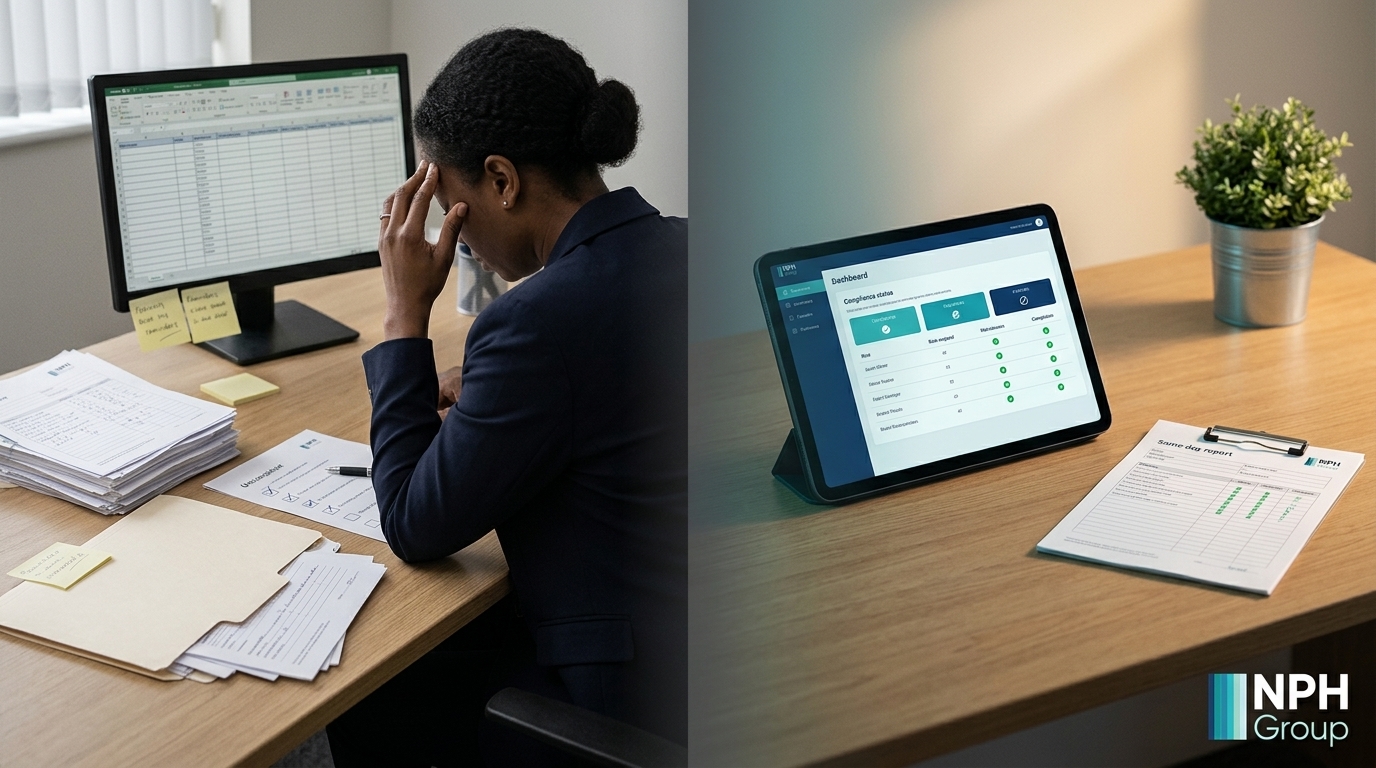
Technology plays a crucial role in maintaining compliance. Let’s explore the tools that make this possible.
The Role of Live Compliance Dashboards
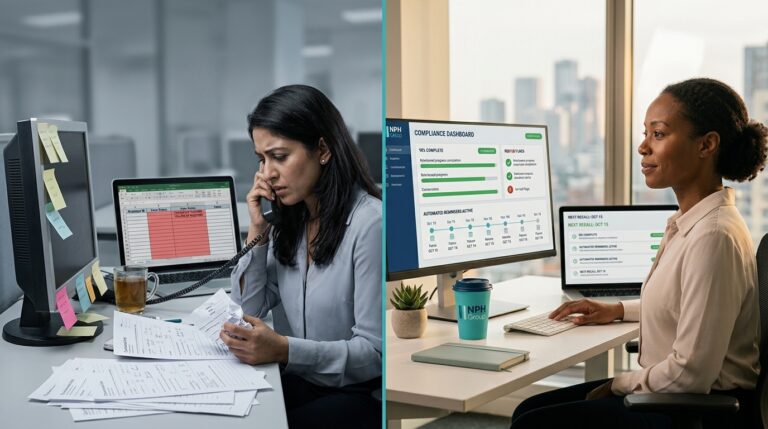
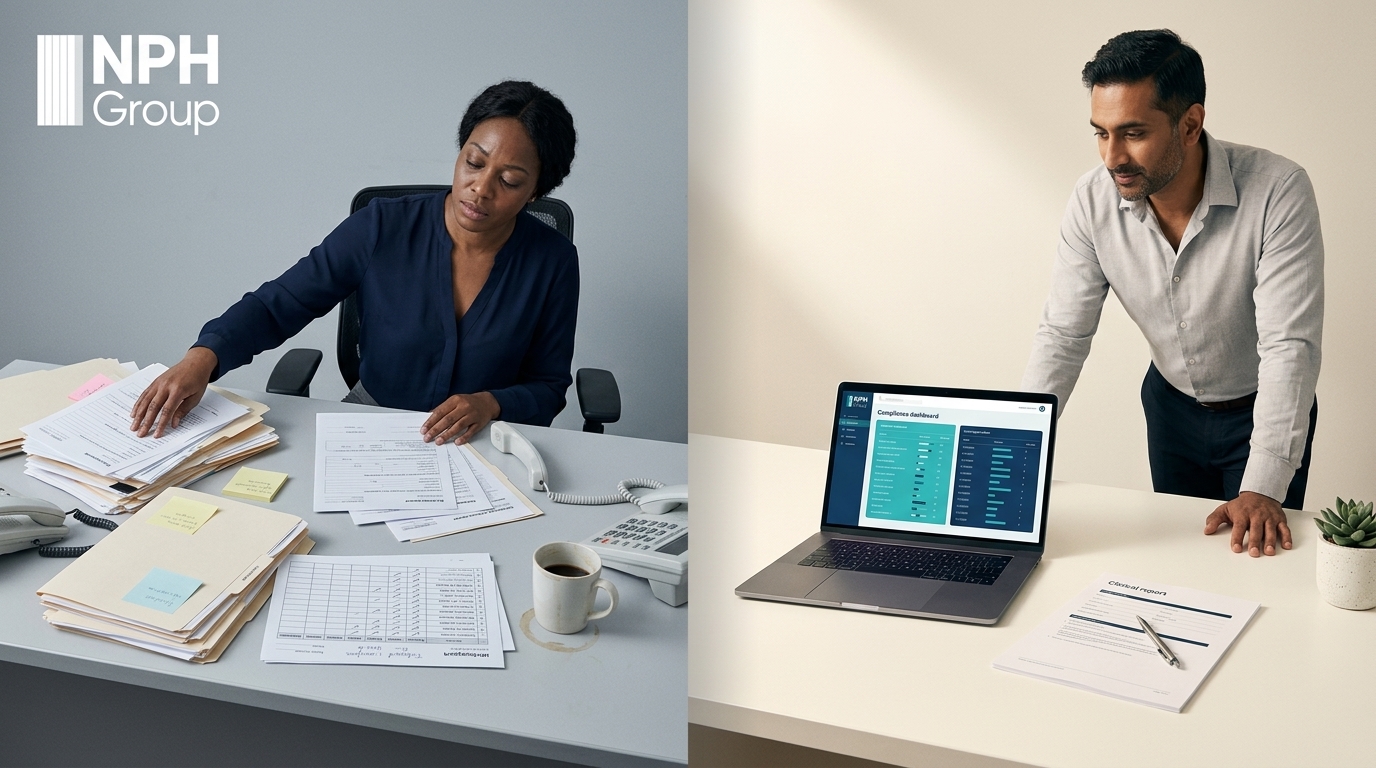
Live compliance dashboards offer real-time visibility into your occupational health programme. These dashboards provide instant access to compliance status, upcoming appointments, and more. This transparency allows you to manage compliance proactively, addressing gaps before they become issues. With live data at your fingertips, you can make informed decisions swiftly.
Achieving Audit-ready Reporting
Audit-ready reporting simplifies the compliance process. By storing all records digitally, you ensure every document is easily accessible and up-to-date. This method not only makes audits less daunting but also provides peace of mind knowing your records are accurate. With audit-ready reporting, you stay prepared for any compliance check, reducing stress and saving time.
Ensuring Clinician-led Decisions
Despite the automation, clinician-led decisions remain at the core of the system. By automating admin tasks, clinicians have more time to focus on patient care and make informed decisions. This balance ensures that technology enhances, rather than replaces, clinical expertise. Ultimately, you achieve a system that supports clinicians while reducing admin burdens.
Frequently Asked Questions
What is a self-running occupational health system?
A self-running occupational health system automates tasks like booking and compliance monitoring, reducing admin effort while maintaining clinical quality. It enables HR and H&S teams to focus on strategic decisions rather than paperwork.
How does role mapping improve compliance?
Role mapping aligns specific health requirements to job roles, ensuring every employee receives the right checks. This precision reduces unnecessary tests and helps maintain compliance effectively.
What are the benefits of digital onboarding questionnaires?
Digital onboarding questionnaires streamline data collection, reducing errors and speeding up the process. They provide clinicians with accurate upfront information, simplifying employee onboarding.
How do live compliance dashboards help in managing occupational health?
Live compliance dashboards offer real-time visibility into compliance status and upcoming appointments. This transparency allows for proactive management, addressing gaps before they become issues.
Why are clinician-led decisions important in an automated system?
Clinician-led decisions ensure that clinical expertise remains central to the health system. Automation handles admin tasks, allowing clinicians to focus on patient care and make informed decisions.