Deciding on the right occupational health (OH) model for your business is a weighty responsibility.
This is especially true when you’re navigating the complexities of compliance, managing budgets, and striving to keep your workforce healthy and productive.
If you’re feeling the pressure of this choice, you’re certainly not alone. This article delivers a concise, actionable comparison of in-house versus outsourced OH. It will empower you to make the most efficient and effective decision for your business.
Key Takeaways
- In-house OH offers ultimate control but often means high fixed costs, a heavy administrative load, and potentially limited specialist expertise for many businesses.
- Outsourced OH can provide broader specialist knowledge, greater cost flexibility, and easier scalability but demands careful provider selection to guarantee reliability and quality service tailored to your needs.
- Cost is a major differentiator. In-house models require significant, ongoing investment in dedicated staff, facilities, and equipment. Outsourcing often allows for more variable, usage-based costs, but transparency from the provider is key.
- The “best” model depends on your specific needs. Factors like company size, industry risk profile, budget, and administrative capacity are crucial in determining the right fit.
- Smart evaluation is non-negotiable. Whether in-house or outsourced, truly understanding your role-specific OH requirements is the bedrock of an effective, compliant, and value-driven programme.
Understanding the Occupational Health Landscape
Choosing the right occupational health (OH) model isn’t just an operational footnote. It’s a strategic decision with direct consequences for your legal compliance, financial outlay, your employees’ health, and your business’s overall productivity.
Many organisations, especially in sectors like manufacturing, construction, and engineering, find themselves at this very crossroads. They need to balance these critical factors effectively.
As your experienced occupational health partner, our aim here isn’t to push you towards one specific answer. Instead, we want to equip you with clear, balanced information.
We believe in full transparency, examining every angle. This is so you can make a truly informed choice that best serves your company’s unique circumstances and the wellbeing of your team.
Deconstructing In-house and Outsourced Occupational Health Models
Let’s look into the practical realities of each approach.
Understanding In-house Occupational Health: Taking Full Ownership
What does running your own OH service involve?
Typically, it means directly employing occupational health nurses (OHNs) and perhaps physicians (OHPs). It also involves setting up and equipping an on-site clinic, and directly managing all health surveillance, employment medicals, and absence management processes yourself.
Advantages (Pros):
The main appeal often lies in direct control. You dictate the OH strategy, priorities, and how services are delivered.
An in-house team can become deeply integrated with your company culture. This allows for an immediate and nuanced understanding of your specific operational risks.
Having clinicians on-site can, in theory, mean rapid response for urgent issues – assuming your team has the capacity. You also have direct management of workforce health data. This can allow for highly tailored internal analysis.
For instance, spotting a trend in musculoskeletal issues within a specific department could lead to swift, targeted ergonomic interventions. We worked with a large Teesside firm some years ago that valued this immediate data access for their complex, rapidly changing shift patterns.
Disadvantages and Challenges (Cons):
The most significant hurdle is the substantial and ongoing financial investment. This isn’t just about salaries. OHN salaries can average around £35,653, rising to £53,000+ for experienced staff. OHPs are considerably more.
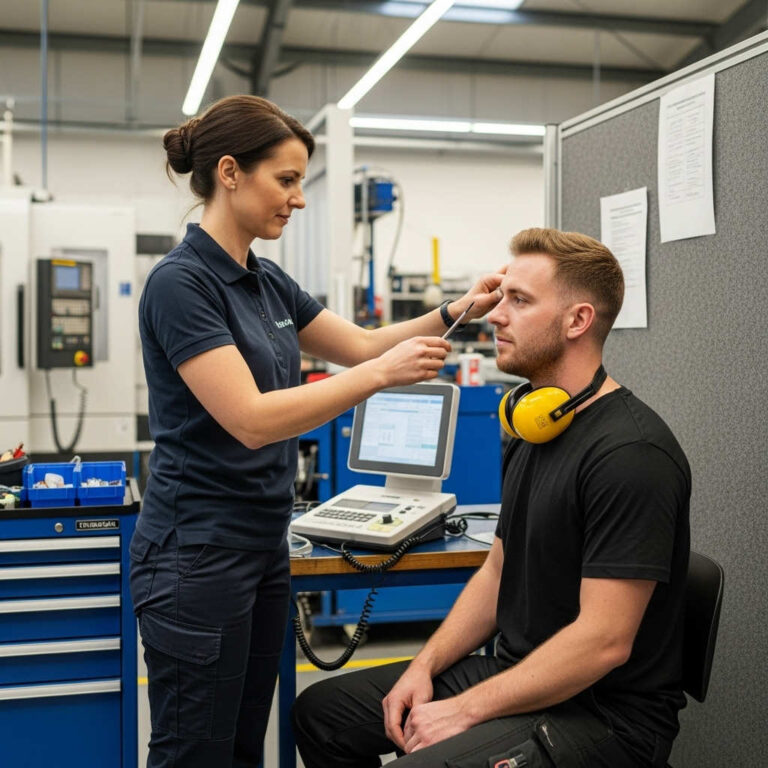
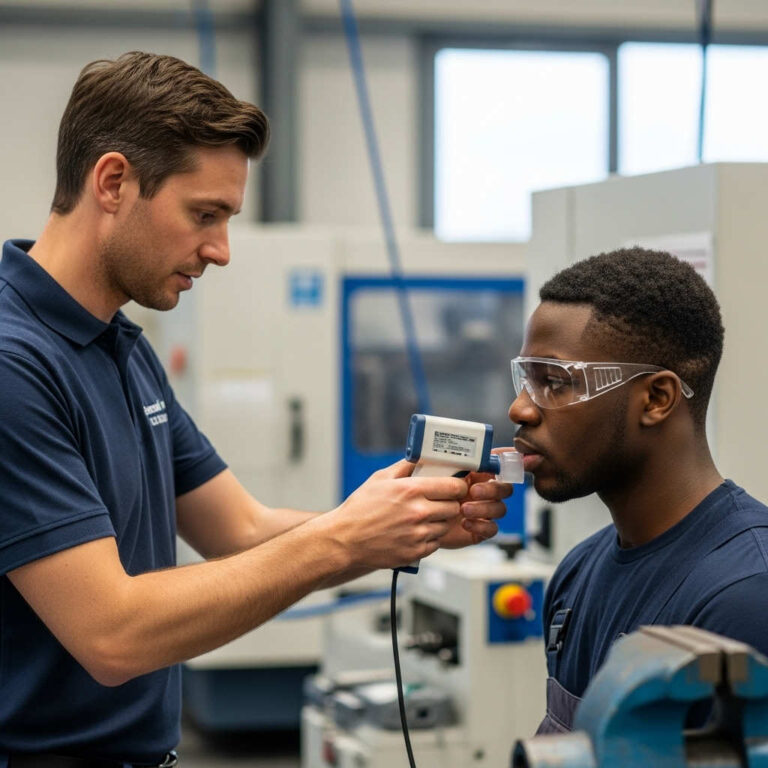
You also have recruitment costs, continuous training, benefits, the cost of dedicated clinic space, and purchasing specialised equipment. This includes items like audiometers and spirometers, which then need regular calibration and maintenance.
SEQOHS accreditation, a recognised UK standard, brings its own fees (e.g., £1200-£2400 for a small service’s initial stages). This fixed overhead exists regardless of immediate service demand, which can be a real issue.
I recall a manufacturing firm that invested heavily in an in-house setup. They found their team underutilised for significant periods, making the cost per employee very high.
Then there’s the significant administrative and management burden. Your internal team will be responsible for everything from OH staff recruitment and management to policy development, complex scheduling, and meticulous record-keeping. This often pulls HR and H&S managers away from other strategic tasks.
Finding and keeping qualified, specialist OH professionals can also be a real challenge, especially for medium-sized businesses. And if you have a small internal team, you risk a limited scope of specialist expertise.
What happens when a complex or rare occupational health issue arises? You may need to seek costly external consultations anyway.
Finally, an in-house service is vulnerable to disruption. If your OH nurse is on holiday or unexpectedly off sick, who covers their duties? This can lead to backlogs and delays in essential services like health surveillance or return-to-work assessments.

Who In-house OH is a Good Fit For:
An in-house model might be a strategically sound choice for very large companies. This could be those at the upper end of the 200-250+ employee range or beyond. This is especially true if they have consistent, high-volume, and complex OH needs alongside substantial internal resources and budget.
It may also suit organisations with highly unique, niche occupational risks. These require deeply embedded, continuous specialist knowledge not easily outsourced.
Who In-house OH is NOT a Good Fit For:
Conversely, an in-house model is generally not a good fit for most small to medium-sized enterprises (SMEs). This is particularly true for those in the 50-150 employee range, due to prohibitive costs and potential underutilisation.
It’s also less suitable for businesses with fluctuating OH demands. An example is project-based work common in construction, where fixed overheads become a liability.
Finally, companies lacking the budget, internal expertise, or administrative capacity to manage a dedicated OH department effectively will struggle with an in-house model.
Understanding Outsourced Occupational Health: Leveraging External Expertise
Outsourcing occupational health typically involves engaging a third-party provider. They deliver a range of OH services, including access to OHNs/OHPs, various assessment types, mobile services, absence management support, and health promotion programmes.
Advantages (Pros):
One of the primary benefits is access to a broader range of specialist clinical expertise. This is often more than an SME could afford in-house. This is vital for industries like manufacturing or construction with varied and specific risks.
Cost-effectiveness and flexibility are also key. Outsourcing often means more variable costs, aligning expenditure with actual usage. Pay-As-You-Go (PAYG) models offer great flexibility. Retainer agreements can provide budget predictability. For example, PAYG new starter screening might be around £30-£50. Specific medicals like Asbestos Medicals could be £140-£300.
Outsourcing typically offers greater scalability. It can more easily match fluctuating business needs, growth, or project-based work. This also means a reduced administrative burden for the client company. The provider handles direct staff management, equipment procurement, and OH department oversight.
Many businesses also find that an external provider brings enhanced objectivity and impartiality. Reputable providers offer established systems and technology. An example is NPH Group’s digital diary manager (‘pick list’) for efficient booking of tailored appointments. They also have quality assurance processes, often evidenced by SEQOHS accreditation.
The provider is also responsible for recruitment, training, and competency of OH staff.
Disadvantages and Challenges (Cons):
However, outsourcing isn’t without potential pitfalls. The quality, expertise, and reliability of providers can vary significantly. This is a significant concern.
We’ve heard from many companies who’ve been let down by previous providers. This could be through cancelled clinics at short notice, frustrating delays in receiving critical reports, or a lack of genuine understanding of their specific industry risks.
Choosing a partner without proven experience in your sector, for example manufacturing or construction, can lead to a service that isn’t truly fit for purpose. This is why thorough due diligence is so important. A poor provider might deliver generic advice that misses crucial role-specific nuances. Their reporting might be so slow it hampers your ability to manage absence effectively.
You will also have less direct control over service delivery compared to an in-house team. Control is exercised through the Service Level Agreement (SLA).
If the SLA isn’t robust or the provider doesn’t invest in understanding specific client needs, there’s a risk of generic, ‘one-size-fits-all’ service. This can be a particular issue if a provider offers standardised packages without tailoring them.
Integrating an external provider with your company culture can also present challenges. And, of course, sharing sensitive employee health information requires trust in the provider’s data security protocols.
Finally, a common frustration can be opaque pricing or unexpected ancillary charges if contracts aren’t crystal clear.

Who Outsourced OH is a Good Fit For:
Outsourcing OH is typically the most beneficial and strategically sound choice for most Small to Medium-Sized Enterprises (50-250+ employees). This is especially true for those in high-risk sectors like Manufacturing, Construction, and Engineering needing comprehensive but flexible OH support.
It suits companies requiring access to a diverse range of specialist OH services not justifiable for a full-time in-house role. Businesses with fluctuating OH needs, project-based work, or those undergoing growth also benefit from scalability.
Organisations seeking to minimise fixed overheads and preferring a variable cost model for OH services often find outsourcing advantageous.
Who Outsourced OH is NOT a Good Fit For:
Crucially, even outsourcing might not be the ideal fit. It may not suit businesses seeking only the absolute lowest-cost, ‘tick-box’ compliance checks without interest in added value. NPH Group’s value-focused model, for example, may not align with such minimal requirements.
Organisations with extremely high-volume, uniquely complex, daily OH needs that genuinely require a constant, dedicated specialist on-site presence might also find it unsuitable. This is a rare scenario for most SMEs.
Companies with a strong cultural aversion to outsourcing any function perceived as critical, regardless of external expertise or efficiency, may also prefer an in-house model.
Side-by-Side Comparison: In-house vs. Outsourced OH at a Glance
To help you see the main differences quickly, here’s a summary:
| Feature | In-house Occupational Health | Outsourced Occupational Health |
| Cost Implications | High upfront & ongoing fixed costs (staff, premises, equipment). Cost-effective only at very high, consistent volume. | Variable costs (PAYG, retainer), lower fixed overheads. More scalable cost-effectiveness for most SMEs. |
| Control & Flexibility | High direct control. Less flexible to fluctuating needs; scaling is slow and costly. | Indirect control (via SLA). Highly flexible and scalable to business changes. |
| Access to Clinical Expertise | Dependent on internal team’s skills; potentially limited specialist scope. Deep company-specific knowledge. | Access to a wider pool of specialists and diverse industry experience. |
| Administrative Burden & Resource Requirements | Significant internal management overhead (staffing, policies, scheduling, procurement). | Reduced internal admin; focus shifts to provider/contract management. |
| Compliance Management Approach | Direct full responsibility for systems, expertise, and record-keeping. | Shared responsibility (employer retains ultimate duty); relies on provider expertise & accreditation (e.g., SEQOHS). |
| Service Responsiveness & Quality Consistency | Potentially rapid on-site response (if staffed). Vulnerable to internal staff absence. Direct control over quality. | Responsiveness defined by SLA. Can offer consistent quality via standardised processes if the provider is reputable and well-chosen. |
| Impact on Employee Wellbeing & Strategic Data Use | Direct feedback loop; potential for highly tailored internal analysis and initiatives. | Provider reports anonymised trends; potential for integration and broader benchmarks. |
Key Factors to Consider for YOUR Business: Making the Right Strategic Choice
To determine the best OH model for your organisation, reflect on these key questions:
- Company Size and Structure: How many employees? Single or multiple sites in the Northeast? What is your growth trajectory?
- Industry-Specific Risks & Complexity of OH Needs: What are the prevalent health hazards in your sector? How complex are your health surveillance and fitness-for-work requirements?
- Budgetary Constraints and Preferences: What is your available budget for OH? Do you prefer fixed or variable costs?
- Administrative Capacity & Internal Expertise: Do you have the internal resources and expertise to manage an OH service directly?
- Cultural Preferences for Control vs. External Expertise: How important is direct control versus accessing specialist external knowledge?
- Strategic Importance of OH Data and Wellbeing Programmes: How critical is the strategic use of workforce health data for your organisation?
NPH Group’s Expert Perspective: Guiding Your Decision-Making Process
Choosing between in-house and outsourced occupational health is a significant decision. There is no single “best” answer; the optimal choice depends entirely on your organisation’s specific circumstances, resources, and strategic objectives.
The core trade-offs often revolve around control and integration versus cost-effectiveness, access to specialist expertise, and scalability. It is essential to align your OH model with your overarching business goals for compliance, productivity, and employee wellbeing.
From our experience as an occupational health partner, we believe that effective OH – whether in-house or outsourced – always starts with a thorough needs assessment. This is why NPH Group’s detailed role-based evaluation is central. It ensures services are genuinely tailored and efficient.
Clear, responsive communication and reliable service delivery are also paramount. The benefits of leveraging technology for administrative efficiency and accessing health insights are also important.
A proactive approach to OH, moving beyond basic compliance to support overall employee wellbeing, is also a hallmark of an effective programme. The reassurance provided by recognised accreditations like SEQOHS is also significant.
Conclusion & Next Steps: Towards an Informed Occupational Health Strategy
We trust this comparison has provided valuable clarity on the advantages and disadvantages of in-house versus outsourced occupational health models. Empowering you to make a well-informed, strategic decision is our primary aim.
The optimal OH model is one that aligns with your company’s specific needs, resources, and strategic objectives. If you’re still weighing your options, perhaps ask yourself:
- Do we have the sustained financial and managerial resources to build and maintain a high-quality in-house OH service?
- Are our OH needs consistent and substantial enough to fully utilise an in-house team, or would an outsourced model better suit our operational realities?
- What level of direct control are we willing to trade for access to broader specialist expertise and potentially reduced administrative burden?
Unsure About Your OH Compliance?
Navigating UK Occupational Health regulations can be complex. Ensuring compliance isn’t just about avoiding fines; it’s about protecting your workforce. Our experienced Occupational Health Specialists are here to provide expert, tailored guidance.
Start with Clarity: Assess Your Compliance Risk.
Ready for a clear, bespoke evaluation of your business’s occupational health needs? Access the NPH Group Business Health Evaluation Tool to start your assessment.
Ready for a Tailored Solution?
Once you’ve reviewed your potential needs, or if you prefer direct expert advice, let’s discuss how NPH Group can help. Our detailed role-based evaluation and efficient services can ensure your business is fully compliant and your workforce is supported.Discuss your specific needs or call us directly on 0191 6053140
Learn more about our approach to Health Surveillance
Learn more about our approach to Employment Medicals
Learn more about our approach to Absence Management
Your Partner in Workplace Health
Making the right choice in OH provision is a journey. We trust this discussion has empowered you to take positive, confident action for your organisation’s health and safety.
We are here to provide the clear guidance you need every step of the way. If you have questions or challenges when deciding on an occupational health model, we welcome your thoughts.

Related Articles