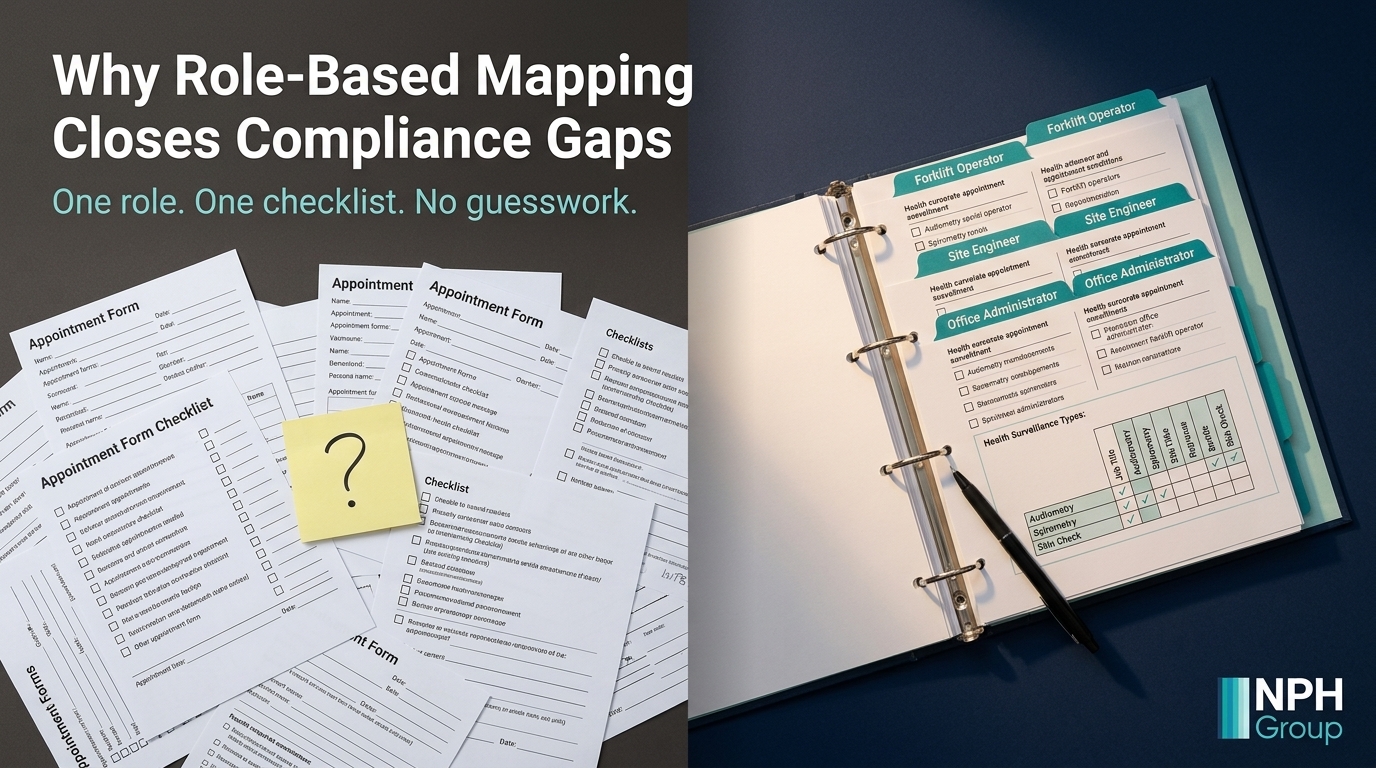
Too many employers still rely on a one-size-fits-all health check for every role, leading to wasted appointments and hidden compliance gaps. When occupational health mapping starts with the specific risks tied to each role, you book only what’s needed and close gaps with confidence. This approach turns audit readiness from a last-minute scramble into a clear, manageable process you can trust. Learn more about healthcare compliance management.
Role-Based Occupational Health Mapping
The importance of mapping occupational health requirements tailored to each role cannot be overstated. Understanding role-specific risks ensures compliance without unnecessary testing.
Understanding Role-Based Mapping
Role-based occupational health focuses on matching health checks with the specific needs of each job. Instead of applying a generic set of tests, it uses tools like RoleReady to align health requirements with job roles. This ensures that each employee undergoes assessments relevant to their actual job responsibilities. For example, a construction worker might need regular hearing tests, while an office worker might not. This approach not only saves time but also enhances accuracy in compliance. By using this system, you reduce unnecessary appointments and focus on essential health checks.
Addressing Compliance Gaps
Mapping health requirements by role helps fill compliance gaps. Using systems like RoleReady, you can identify and address potential oversights in your health check programs. This means no role is left without the necessary assessments, which is crucial for maintaining safety standards. For instance, roles in high-risk industries like manufacturing or transport require specific health checks to ensure both employee safety and legal compliance. Adopting a role-based approach prevents gaps that could lead to non-compliance issues, offering peace of mind and a more efficient health management process.
Avoiding Over-Testing and Waste

Minimising over-testing through role-specific assessments reduces waste and enhances efficiency. Streamlining health appointments and tailoring checks to role requirements are key steps.
Streamlining Health Appointments
By adopting role-based mapping, you streamline health appointments, ensuring each one serves a real purpose. This method eliminates unnecessary tests, saving both time and resources. For instance, with automated recalls and self-booking systems, employees only schedule appointments relevant to their roles. This means fewer missed appointments and better management of health resources. Streamlining appointments not only benefits HR but also improves the overall experience for employees. The process becomes smoother, reducing the administrative burden on HR teams.
Tailoring Checks to Role Requirements
Tailoring checks to specific roles means more precise health management. Using systems like ClearPath, you can customise digital questionnaires and health checks to fit each role’s needs. This approach ensures that each employee receives the right assessments, avoiding redundant tests. For example, a driver might require regular vision tests, while a factory worker might need respiratory checks. Tailoring checks helps maintain safety standards and ensures compliance with health regulations. It also allows for more accurate tracking of employee health, contributing to a safer workplace environment.
Achieving Audit Readiness
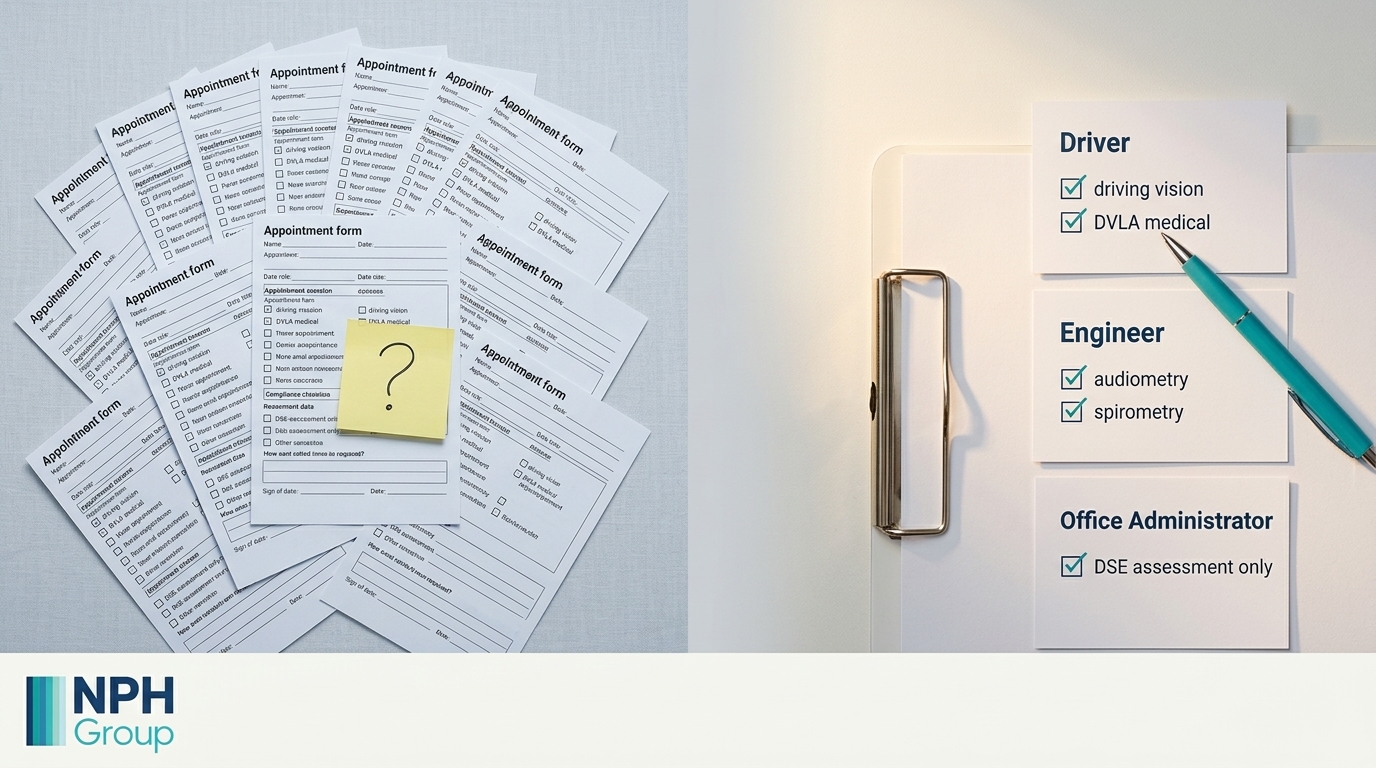
Audit readiness is simplified through role-based health mapping, making compliance straightforward and hassle-free. Tools that simplify occupational health compliance play a crucial role in this process.
Simplifying Occupational Health Compliance
Simplifying occupational health compliance involves using systems that automate and manage health checks efficiently. With tools like HealthTrack, you maintain real-time compliance visibility and automated documentation. This ensures you are always prepared for audits without last-minute scrambles. The system provides audit-ready documentation, storing every record securely and accurately. This comprehensive approach to compliance management helps reduce admin workload and keeps you ahead of regulatory requirements. It ensures that all records are maintained in an organised manner, ready for any compliance checks.
Effective Tools for Risk Assessment
Effective risk assessment tools are key in maintaining compliance and ensuring workplace safety. Using innovative platforms, you can perform precise risk assessments for each job role. This includes leveraging technology for automated recalls and live compliance dashboards that give you real-time insights. By doing so, you can quickly address any compliance issues and make informed decisions. These tools are crucial in identifying potential risks before they become compliance problems. They also provide actionable insights, helping you maintain a proactive approach to health and safety management.
Frequently Asked Questions
What is role-based occupational health mapping?
Role-based occupational health mapping involves aligning health checks with the specific requirements of each job role. This approach ensures that each employee receives relevant assessments, improving compliance and reducing unnecessary tests.
How does role-based mapping address compliance gaps?
Role-based mapping identifies and addresses potential compliance gaps by tailoring health checks to the specific needs of each role. This method helps ensure no role is left without necessary assessments, enhancing workplace safety and compliance.
Why is it important to avoid over-testing in occupational health?
Avoiding over-testing saves time and resources by eliminating unnecessary health checks. It ensures that each assessment is relevant to the employee’s role, leading to more efficient health management and reduced administrative burden.
How can role-based mapping help achieve audit readiness?
Role-based mapping simplifies audit readiness by providing real-time compliance visibility and automated documentation. This ensures that all records are organised and ready for compliance checks, reducing last-minute audit scrambles.
What tools are effective for role-based risk assessment?
Effective tools for role-based risk assessment include automated recall systems and live compliance dashboards. These tools provide real-time insights, helping you maintain compliance and ensure workplace safety efficiently.