One partner, six pillars: how a connected occupational health model keeps you audit‑ready with less admin

A single connected occupational health partner streamlines compliance with role-based services, automated recalls, digital onboarding, and live dashboards, reducing admin and ensuring audit readiness across sectors.

How occupational health automation keeps compliance moving without the manual workload

Occupational health automation streamlines HR compliance by reducing manual tasks like chasing paperwork and appointments. Tools like RoleReady, ClearPath, and HealthTrack enable faster compliance, real-time oversight, and improved efficiency.

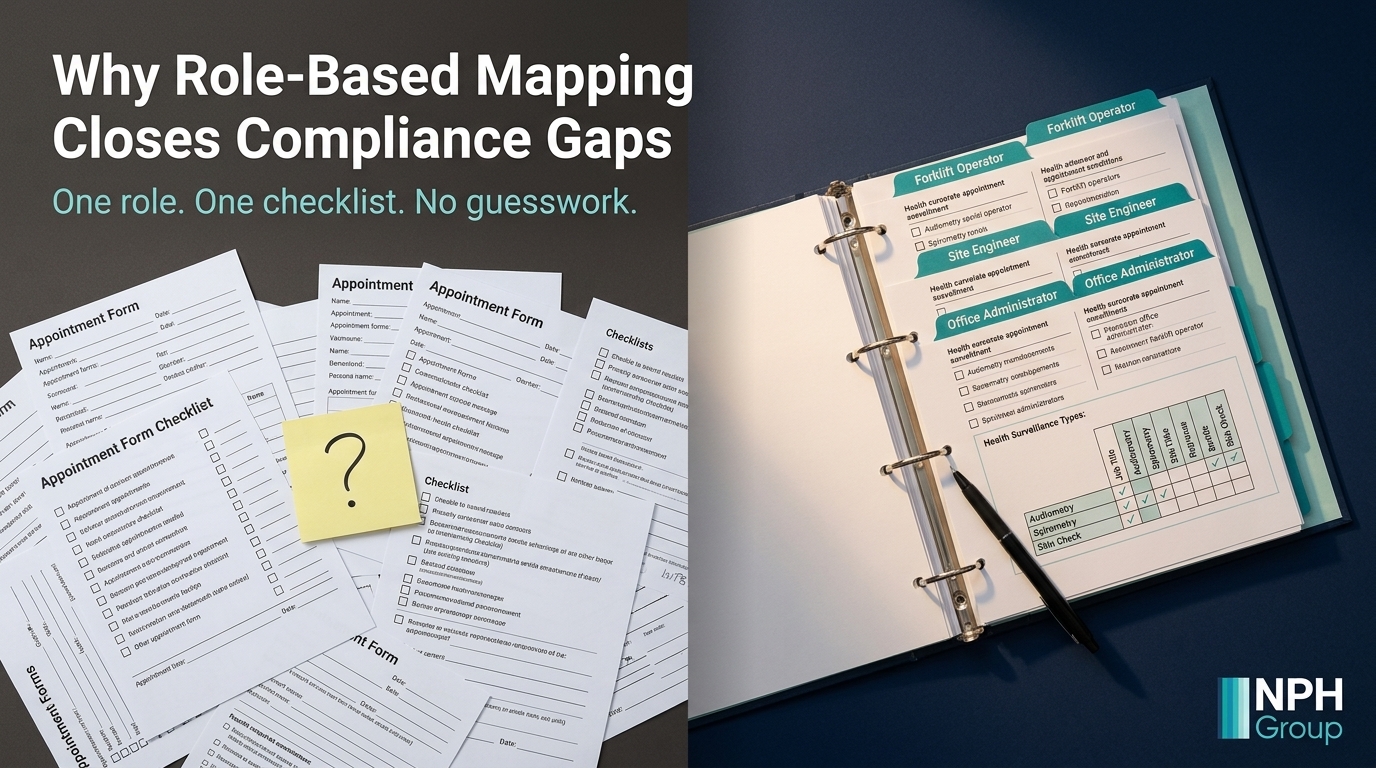
Role-based occupational health mapping: close gaps, cut waste, stay audit‑ready

Role-based occupational health mapping tailors health checks to specific job risks, reducing unnecessary tests, closing compliance gaps, streamlining appointments, and ensuring audit readiness with automated tools.

Choosing an occupational health provider: culture, accreditation and responsiveness that actually count

Choose an occupational health provider by prioritizing cultural fit, key accreditations (SEQOHS, ISO 9001, CQC), and responsiveness, including same-day reports and mobile clinic services for efficiency.

Pharmacogenomics explained: why gene‑guided medicines matter for workplace wellbeing

Pharmacogenomics personalizes medication using genetic insights, reducing adverse drug reactions and enhancing safety, wellbeing, and productivity in workplace health, especially for safety-critical roles.

How Pharmacogenomics (PGx) Helps Employers Make Safer, Smarter Health and Safety Decisions

Pharmacogenomics helps employers tailor medication plans based on genetics, enhancing safety in critical roles, reducing adverse drug reactions, improving absenteeism, and ensuring compliance with health regulations.

Personalised medication insights: strengthening confidence in workplace health planning

Personalised medication insights, combining pharmacogenomics and medicines management, enhance workplace health planning by reducing adverse drug reactions, improving safety in critical roles, supporting SEQOHS compliance, and boosting productivity through proactive, tailored health strategies.