Occupational health is your frontline defence against regulatory fines, rising sickness absence and hidden workplace hazards. This guide sets out clear, actionable steps on legal duties, documenting and reviewing risk assessments, and turning findings into controls that protect people. The practices below help you show compliance and reduce disruption through coordinated occupational health services.

The sections that follow focus on two immediate priorities: understanding the law and converting assessments into written processes that drive everyday practice. You will learn how to capture hazards across physical, chemical, ergonomic and psychosocial domains, why a documented risk assessment with assigned owners matters in an audit, and how to translate findings into the hierarchy of controls, safe systems of work and monitoring steps. Link monitoring steps to occupational health services such as occupational medicine, health surveillance, fitness-for-work assessment, workplace wellbeing programs and wider employee health initiatives so the organisation remains resilient.
What you need to know:
-
Understand legal duties: identify the primary statute and applicable guidance for your jurisdiction, document responsibilities and prioritise compliance actions.
-
Conduct comprehensive risk assessments: capture physical, chemical, ergonomic and psychosocial hazards, assign owners and schedule regular reviews so you can prove due diligence.
-
Translate assessments into controls: apply the hierarchy of controls and document safe systems of work, training needs and monitoring steps.
-
Define referral triggers and pathways: create a short checklist and a clear fitness-for-work pathway so managers act consistently and refer cases promptly.
-
Implement targeted health surveillance: deploy surveillance where exposures can lead to disease, with defined protocols and triggers for extra checks.
-
Offer prevention and return-to-work programs: provide vaccination clinics, mental health support, ergonomic assessments and graded return-to-work pathways.
-
Measure impact with focused KPIs: track a compact dashboard (sickness days, recurrence, uptake) and use before/after pilots to show ROI.
-
Pilot and iterate services: run short pilots with named owners, baseline KPIs and monthly governance reviews to refine offerings.
-
Partner with occupational health providers: select providers based on scope, pricing and data handling and integrate clinical input into workplace controls.
Understand occupational health legal duties and risk assessments
Begin with the law: identify the statutes and guidance that apply where you operate. In the UK, check the Health and Safety at Work etc. Act 1974, the Management of Health and Safety at Work Regulations and HSE guidance; other jurisdictions will have equivalent laws and regulators. Record who is responsible so audit evidence is straightforward.
Turn risk assessments into controls using the hierarchy of controls: elimination, substitution, engineering controls, administrative controls and personal protective equipment. Capture safe systems of work, training needs and monitoring steps in written procedures, and involve occupational health clinicians when medical input is required to set surveillance schedules and fitness-for-work triggers. Schedule regular reviews and set re-assessment triggers such as annual reviews, role changes, incidents and exposure exceedances; store versioned assessments centrally and link them to training records with a named owner who signs off on corrective actions and monitoring.
Define referral triggers and fitness-for-work pathways
Managers need a short, unambiguous checklist so referrals happen consistently and promptly. Keep the checklist to one page, train managers to use it and customise it for local policy and role demands. A practical set of triggers includes long-term sickness (four weeks or more), frequent short-term absence patterns, noticeable performance decline where health is suspected, work-related stress lasting two weeks or more, return-to-work reviews after significant absence, and suspected disability or recurring functional limitations.
Discuss any possible referral with the employee first and obtain written consent before sharing clinical information with a clinician. Provide a current job description and specific questions so the clinician’s assessment links health findings to job demands. An employer-facing fitness-for-work report should state fitness status, clear work restrictions and recommended reasonable adjustments while keeping diagnoses and sensitive clinical detail in the clinician’s confidential record unless the employee agrees to share. Agree timeframes and escalation routes so recommendations become action rather than paperwork. For practical, manager-facing referral guidance see the managers’ guide to occupational health referrals.
Build health surveillance and confidentiality safeguards
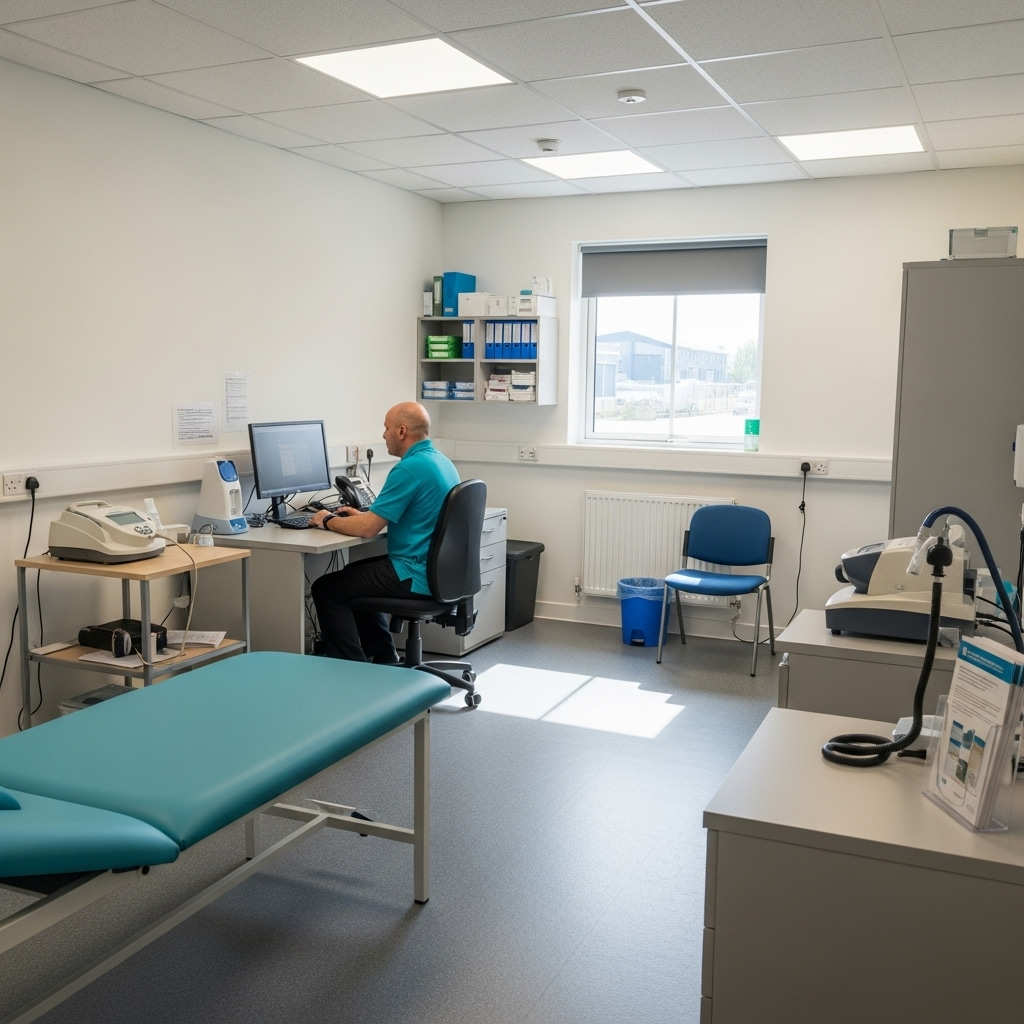
When risk assessments identify exposures that can lead to disease, implement targeted health surveillance to catch problems early. Define clear protocols for each hazard: the specific test or check, who delivers it, frequency, baseline requirements and the trigger for extra checks. Use occupational health as the clinical hub so surveillance links to workplace controls, follow-up care and corrective actions.
Choose practical, evidence-based surveillance tools and set a monitoring schedule proportional to the risk. Typical options include:
-
audiometry for noise exposure
-
spirometry for dust and fume risks
-
biological monitoring for solvents or metals
-
regular symptom questionnaires where appropriate
Specify routine intervals, post-exposure checks and clear criteria for escalation so clinicians can report early signs and you can tighten controls promptly. Protect employee privacy by keeping occupational health records separate from personnel files and applying robust data controls such as encryption, access logs and role-based permissions. Follow official guidance such as the HSE guidance on health surveillance when designing schedules and escalation criteria.
Follow GDPR or your local data protection law and record the lawful basis for processing. Share only the minimum necessary information with line managers, typically a statement of fitness to work and any restrictions, and keep an auditable trail of disclosures and consent where required.
Use aggregated, anonymised data to drive workforce-level action while protecting individual details, and define retention periods and secure disposal processes as part of your governance. Assign clear case management roles so follow-up, adjustments and return-to-work planning occur without delay.
Offer workplace wellbeing, prevention and return-to-work programs
Practical wellbeing combines prevention with easy access to care so issues are caught early and treated quickly. Offer on-site vaccination clinics, targeted health screenings, mental health support and ergonomic assessments to reduce risk and remove barriers to care. Add telehealth triage for fast intervention when employees report symptoms so time-to-care shortens and unnecessary absence is avoided, and embed these services within your occupational health framework so they sit alongside safety and absence processes.
Make programs measurable so wellbeing becomes a business asset rather than a nice-to-have. Track participation rates, reductions in sickness absence and changes in self-reported work ability, and add a simple ROI metric such as cost per prevented absence. Use regular feedback from employees and line managers to refine offerings and boost engagement, and report uptake and outcomes to leadership quarterly to keep programs funded and focused. Evidence from published studies can help shape program design; see a relevant study on occupational health program outcomes for examples of measured impacts.
Create a clear, documented return-to-work pathway that supports graded duties, temporary role modifications and workstation or equipment changes where needed. Train managers to implement adjustments and use staged review points with occupational medicine or rehabilitation providers if recovery stalls. Maintain confidential individual plans with expected timelines, responsibilities and escalation routes so everyone understands next steps. Start small with a pilot vaccination clinic and a short manager training module, then expand based on early wins and data while preserving privacy and standardised referral criteria.
Measure impact and partner for tailored occupational health services
Track a compact dashboard so you focus on a few metrics that drive change. Useful indicators include days lost to sickness, recurrence rate, workers’ compensation cost per claim, uptake of surveillance programs and employee satisfaction with occupational health. Use monthly reporting to spot trends and a simple scorecard to brief leaders; fewer, actionable KPIs are more effective than an unwieldy list.
Use short pilots and before/after comparisons to demonstrate return on investment. A 90-day pilot often reveals reductions in absence, fewer claims and lower indirect costs such as overtime and agency cover. Capture baseline data and compare the same cohort after interventions so results are defensible in board conversations; present both hard savings and softer gains such as improved morale to support continued investment. Research evidence can strengthen your business case, see this systematic review of workplace health interventions for context when preparing board materials.
Move from plan to pilot with a clear checklist and named owners for each task. Run the checklist as a governance item with deadlines and monthly reviews to keep progress visible. A practical 90-day sequence to follow is:
-
Map workplace risks and decide the scope of services you need.
-
Define referral triggers and the exact outputs you expect from reports.
-
Decide in-house capacity versus outsourcing for clinical and surveillance work.
-
Shortlist providers and request scope, pricing and data protection details.
-
Pilot with a small cohort and baseline KPIs.
-
Finalise consent forms and document data flows and record segregation.
-
Train managers on referrals, confidentiality and reasonable adjustments.
-
Roll out and monitor KPIs monthly; review quarterly.
-
Conduct an annual review and update the program.
If you prefer an external partner, NPH Group can provide consultants to tailor assessments, define data handling and deliver audit-ready reporting and manager-facing guidance. Digital agencies and web developers can add value by automating reporting and integrating connection scanning into client workflows, while small business owners and e-commerce sites should prioritise affordable, continuous TLS/SSL validation to protect customer and employee data when sharing occupational health information.
Keep occupational health practical and compliant
Effective occupational health starts with clear, actionable priorities. Understand your legal duties, complete focused risk assessments, and translate findings into controls and written procedures. Define short, unambiguous referral triggers and a fitness-for-work pathway so managers act consistently, and build health surveillance and confidentiality safeguards so sensitive records stay protected and accessible only to the right people.
Your next steps are simple: list the primary statute that governs your workplace, draft three referral triggers for managers, and schedule a 90-day pilot using the checklist above. If your systems store occupational health records, run an automated TLS/SSL scan to confirm those connections are secure.